
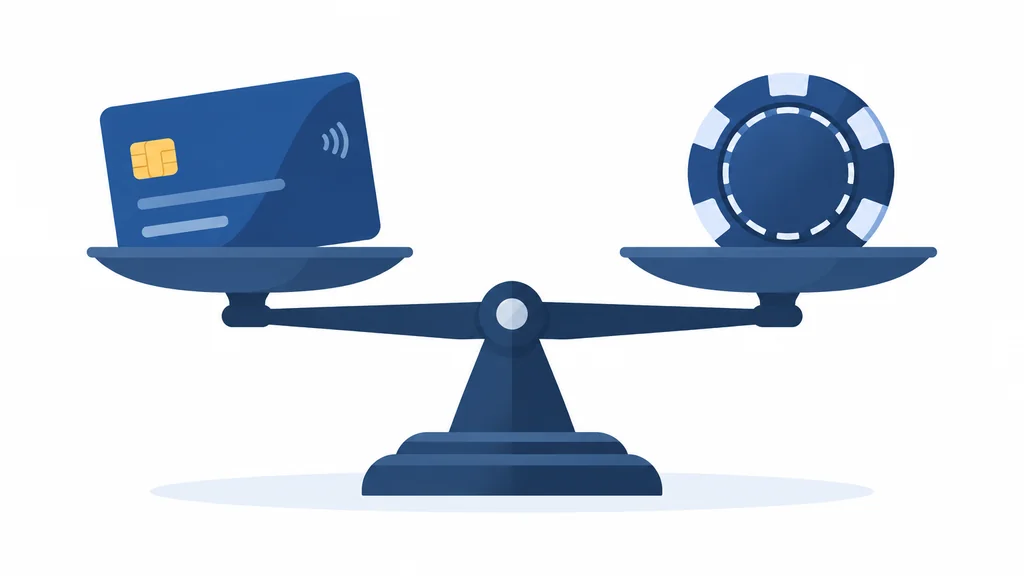
TL;DR: A deposit that goes wrong is usually one of three things. A duplicate charge, a failed deposit that never reached the operator, or a genuine dispute represent the main categories. Refunds are the operator reversing its own charge. Chargebacks are the cardholder’s bank overriding that decision. The route you take depends on which case you have.
What actually happens when an online deposit “goes wrong”?
Three distinct cases sit behind that phrase, and they follow different routes. A duplicate charge is a billing error where the same deposit is taken twice. A failed or declined deposit is money that left the account but never reached the operator’s ledger. A genuine dispute is a disagreement about whether a charge should stand at all. Each has its own fix, its own timeline, and its own set of decision-makers.
Mixing them up is the most common reason a player’s complaint stalls. A duplicate charge reported as fraud, for example, sends the case down a slower path than it needs to travel. The mechanism matters because the first question any support desk asks is which of the three it is looking at.

What’s the difference between a refund and a chargeback?
A refund is merchant-initiated. The operator reverses its own charge and the money returns through the same channel. A chargeback is initiated by the cardholder’s issuing bank, which pulls the funds back and can override the operator’s own refund decision. The distinction is about who holds the lever, not how much money is involved.
That difference in control shapes everything downstream. A refund is a private arrangement between two parties. A chargeback is a formal dispute that drags in the card network, the acquirer and the operator’s payment processor, each with its own evidence requirements and clock.
The check exists because the two processes are not interchangeable. A player who files a chargeback while a refund is already in motion can, in practice, end up with the refund reversed while the dispute stays open. The bank’s process does not pause because the operator was already cooperating.
How does a duplicate deposit get fixed?
This is the simplest case. A retry or a timeout during checkout causes the same deposit to be charged twice. The fix is a traced reversal once the duplicate is confirmed. The player should not touch the extra funds, because spending them complicates the reversal, and should contact support with both transaction IDs so the duplicate can be matched and reversed.
The transaction IDs are the whole game here. A support agent can see one charge easily; matching two requires the reference numbers from both, which is why a screenshot of the bank statement showing both entries speeds things up considerably.
This is a strictly enforced process on the operator’s side, in the sense that the reversal is mechanical once the duplicate is confirmed. It is discretionary only in how quickly support responds. The evidence requirement is not negotiable; the speed of processing depends on the support queue.
What if the deposit failed but the money left my account?
A deposit that never reached the operator’s ledger usually self-corrects on the bank side within roughly 1-5 business days. The authorisation held the funds, the settlement failed, and the hold releases on its own. A formal card-network chargeback dispute, by contrast, can run 30-90 days as evidence passes between player, card issuer, acquirer and operator.
The first case requires time for the bank to process automatically. The second needs a case file. Telling them apart is straightforward. If the operator’s transaction history shows no record of the deposit, the money never arrived and the bank side will release it. If the operator shows the deposit as completed and the player disputes it, that is a chargeback matter.
| Case | Who resolves it | Typical timeline |
|---|---|---|
| Failed deposit, never reached ledger | Bank side, automatically | Roughly 1-5 business days |
| Formal chargeback dispute | Card network, via issuer and acquirer | 30-90 days |
When is a chargeback actually valid for a casino deposit?
Valid reasons are narrow. Fraud or unauthorised use, a duplicate charge, or non-delivery of a paid service are the accepted grounds. A lost bet on a licensed, properly functioning site is not a valid chargeback reason. The card networks built the chargeback mechanism for payment failures and fraud. Bet outcomes on properly functioning sites fall outside the scope of this consumer protection tool.
The filing window is roughly 60-120 days from the transaction date, varying by issuer and network. Merchants typically have roughly 20-45 days to respond to a filed chargeback, depending on network and reason code. Those two clocks run against each other, which is why a late filing weakens a case that might otherwise have been strong.
The “I lost the bet” category deserves a plain statement. Where the site is licensed and functioning as described, the outcome of a wager is not a payment error. Filing a chargeback on that basis is a misuse of a consumer protection tool, and operators contest it with the transaction record in hand.
Why does a licensed operator ask for ID/bank statements before refunding anything?
KYC and source-of-funds checks exist because operators carry anti-money-laundering obligations to confirm that deposited money is not proceeds of crime. The checks are commonly triggered at account setup, and again on large deposits or withdrawals or unusual patterns. They can delay a refund until documents such as a bank statement, payslip or tax return clear.
A KYC gate serves as a procedural requirement. A refund is a movement of money back out of the operator’s system, and the same rules that govern money coming in apply to money going out. When a refund request lands on an account with an incomplete verification file, the file gets completed first.
The check is proportionate when triggered by a first withdrawal, a deposit well above the player’s normal pattern, or a refund request on an account that was never fully verified. It reads as friction when a small duplicate-charge reversal on a long-verified account suddenly requires a fresh payslip. The obligation is real, but the scope of the request is where operators have room to be sensible.
What does a licence actually require the operator to do about a dispute?
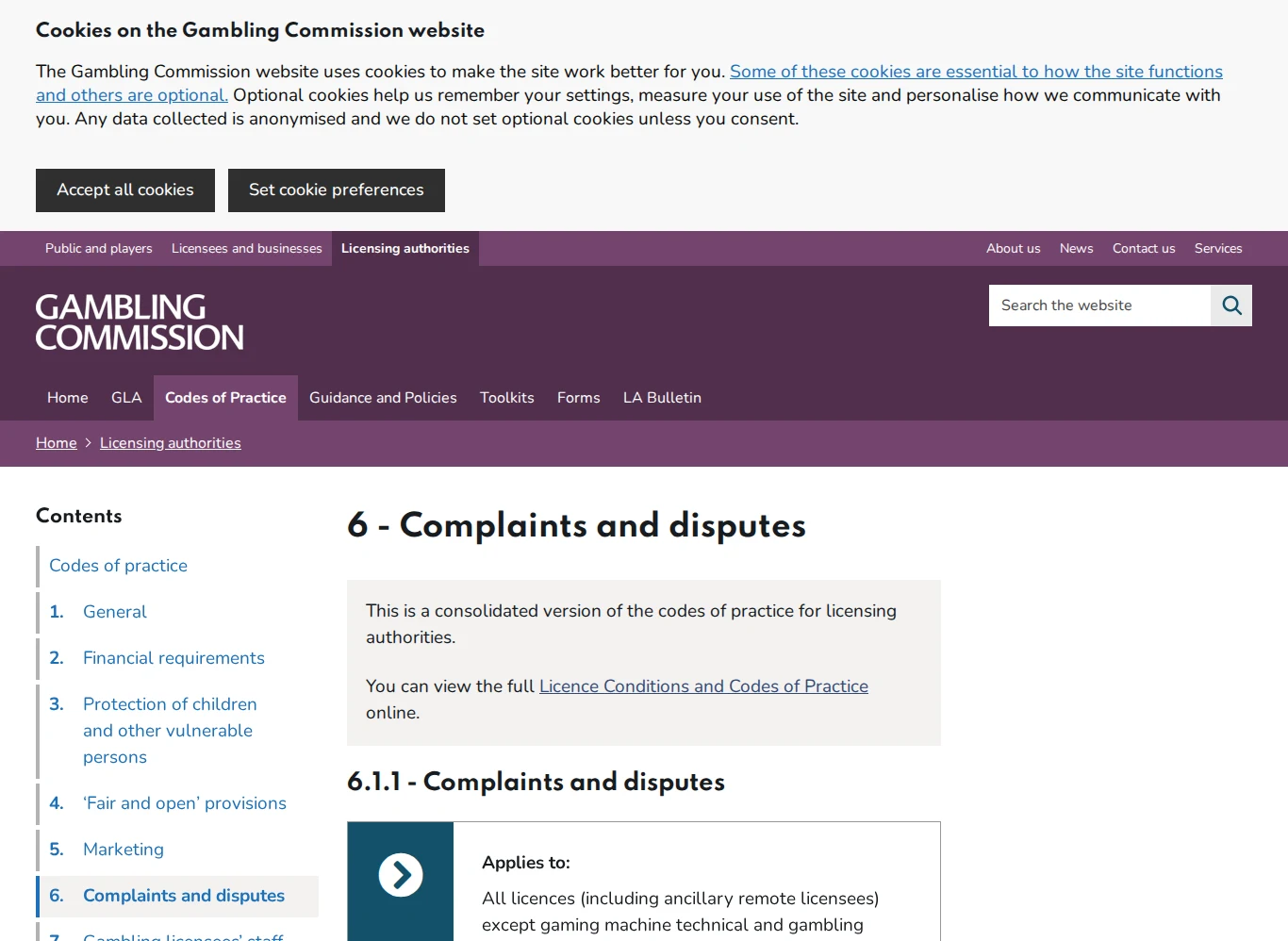
Under the UK Gambling Commission’s LCCP Code, specifically Social Responsibility Code 6, licensees must handle complaints in a timely, fair, open and transparent manner. If a complaint is unresolved after 8 weeks, the operator must let the customer refer it free of charge to an accredited Alternative Dispute Resolution (ADR) entity. The Gambling Commission publishes the conditions in full.
Two features of that framework matter more than they appear to. First, the ADR entity’s decision can be binding on the operator. Second, the licensee cannot use its own complaints process to block a customer’s right to pursue court proceedings. The internal complaints route is a required step before the free ADR referral opens up, but it does not gate a customer’s right to go to court.
Breach of this licence condition can lead the regulator to review, suspend or revoke a licence, or impose a financial penalty. That is the enforcement teeth behind what otherwise reads as a procedural rule. The complaints process is a licence condition, and licence conditions carry consequences.
What should a player actually do, step by step?
Work the sequence in order and do not skip ahead. Each step exists to build a record that the next decision-maker will ask for. The order below is the one that keeps the most options open for the longest time.
- Contact operator support. State which of the three cases applies and include every transaction ID you have.
- Put the complaint in writing. A written record gives you a clear timestamp if you need to show when the clock started.
- Wait out the 8-week internal clock. The operator gets that window to resolve it before ADR becomes available.
- Escalate to ADR if unresolved. The referral is free, and an ADR-agreed resolution can bind the operator.
- Use a chargeback only as a last resort. File only if one of the valid reasons from the section above actually applies.
For a fuller picture of how disputes and player rights fit together, the guide to customer protection protocols and dispute resolution walks through the same sequence from the operator’s side. The wider regulatory compliance framework explains why these obligations exist across jurisdictions. Keep gambling affordable and time-limited while any dispute is running.
FAQ
Can I get a refund just because I lost money gambling? No. A lost bet on a licensed, properly functioning site is not a valid chargeback reason. The card networks recognise fraud or unauthorised use, duplicate charges, and non-delivery of a paid service. A wager that settled as described does not fall into any of those categories, and operators contest such claims with the transaction record.
How long do I have to dispute a card charge? Roughly 60-120 days from the transaction date, varying by issuer and network. The window is a ceiling, not a target. Use the operator’s complaint process first, because a chargeback filed while a refund is in motion can complicate both. The bank’s clock does not pause for the operator’s process.
Why is my refund stuck in verification? A KYC or source-of-funds check is likely open on the account. Operators carry anti-money-laundering obligations and must confirm deposited money is not proceeds of crime. The check can hold a refund until documents such as a bank statement, payslip or tax return clear. Supplying them promptly is the fastest route out.
What happens if the operator and I can’t agree? After 8 weeks unresolved, the operator must let you refer the complaint free of charge to an accredited ADR entity. An ADR-agreed resolution can bind the operator. The operator cannot use its own complaints process to block your right to pursue court proceedings, so the internal route does not close that door.
The mechanism prioritizes traceability over speed, so that each party in the chain—support desk, bank, and ADR—can see what happened and act on the same record. Knowing which case you have, and which lever belongs to whom, is most of the work.